
Cultural Awareness in International Teams
Intercultural training for international teams focuses on developing global competence and the skills to work effectively with colleagues from diverse backgrounds. Teams have the opportunity to consider how they can work together best and to create their own ground rules and cultural norms.
WHY: Benefits of the course
- A better understanding of the cultural challenges facing multicultural workplaces
- Understand the reasons behind conflicts in which culture is involved
- Better recognize, understand, and effectively deal with your own experiences in an international context
- Be mindful of your own culture and the effects it has on your daily work practices and understanding
WHO should attend?
- Anyone from an organisation which is growing its business beyond national borders
- You and your staff if you are increasingly working with colleagues in other countries
- Your staff if they are becoming more culturally diverse
- If you are involved in multinational projects and programmes
WHAT: Course content
- What is culture and how it works?
- What is cultural awareness?
- Cultural values and attitudes (time, space, group dynamics, authority, tasks, relationships, negotiations, conflicts)
- Communication styles
- Cross-cultural management skills
- Working together across cultures
- Language issues
- Tips and strategies for specific countries
- Interactions and practices

Managing Across Cultures
International success is no longer a question of the size of an organisation, it is now more than ever about having the right people with the right skills. Leading an international workforce needs a different approach and skill set to managing a domestic organisation. Global leaders require an understanding of cross-cultural attitudes to motivation, feedback and reward to name just a few examples of where one size does not necessarily fit all.
WHY: Benefits of Managing Across Cultures course
A Managing Across Cultures course will help you to:
- Develop a greater awareness of the values, attitudes and behaviours of different cultures
- Communicate more effectively – both face-to-face and remotely with colleagues from other cultures
- Benefit practically from the different ideas and approaches of team members from other cultures
- Plan and coordinate working in cross cultural teams
- Manage cross-cultural conflict with greater success
WHO should attend?
Such course will be a benefit to anyone who:
- Has a global function within their organisation
- Manages or collaborates with team members from different cultures
- Regularly manages international project teams
WHAT: Course content
A Managing Across Cultures course typically includes:
- Benefits and challenges of cross-cultural team working
- Cross-cultural values and attitudes within teams
- Working practices and styles
- Strategies for building international team
- Organisational culture and the concept of a ‘third culture’
- Achieving successful communication within your team
- How to cope with the challenges of virtual communication

International Virtual Teams
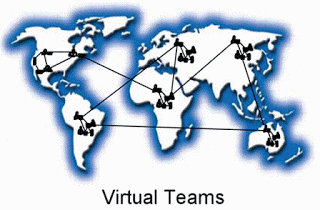
The benefits from global virtual teams are obvious but less so are the frustrations, conflicts and challenges of dealing daily with individuals from different cultures. Cultural differences in communication styles and working practices can easily become amplified and cause a loss of efficiency and money if not addressed and channelled appropriately.
Managing International Virtual Teams has been designed to help you understand your international counterparts and colleagues more effectively, allowing you to select and deploy some of the elements of their cultures to maximise teamwork and strengthen group performance and co-ordination.
WHY: Benefits of an International Virtual Team Course
An International Virtual Teams course will provide you with the ability to:
- Understand the cultural factors that create different working and communication styles
- Develop practical strategies to counter the challenges of remote global communication
- Select the appropriate medium and communication style for each particular context
- Communicate more effectively with colleagues based remotely
- To understand the benefits and challenges of virtual global working and enable you to develop ‘best practice’ for remote communication.
WHO should attend?
Anyone who:
- Manages or works with geographically dispersed colleagues
- Regularly works as part of international virtual project teams
- Liaises with clients and colleagues based in overseas locations or offices
- Relies on emails, telephone calls and video conferences to communicate with international counterparts
WHAT an International Virtual Team course typically includes:
- Cross-cultural values and attitudes affecting virtual and remote working
- Cultural perceptions and assumptions: how we are perceived
- Practical challenges and solutions for global virtual working
- Forming, managing and measuring virtual relationship
*The training programs typically approach the trainees through the three-part process of building awareness, knowledge and skills. The first two components are supported by exercises, dialogues, stories, and incidents; simulations are normally used for the skill-building components.
 Open minds open doors